


Do you have a brand, but you noticed that people can’t spot it in a lineup? That usually means your voice is not clear yet. Your brand voice shows your identity without you having to say, “This is our identity.” You show it in your word choice, sentence style, and also in the tone that runs through every line. So let’s get into how you can build a voice that stands out and still feels right for your business.
Why Brand Voice Matters
A strong brand voice does more than sound nice. It also helps people spot your offers from a mile away. Just think about brands you recognize just by how they write. Wendy’s doesn’t just post. They roast. Nerd Fitness calls its community a “Rebellion” and drops Star Wars references. These voices stick.
A good voice also pushes away the wrong people. In fact, that’s not a bad thing! When someone says, “That’s not for me,” that usually means that it saves both of you time.
Your voice also builds trust. People connect with brands that sound real and stay true to themselves. They can spot a fake in about two seconds flat.
Four Steps to Find Your Brand Voice
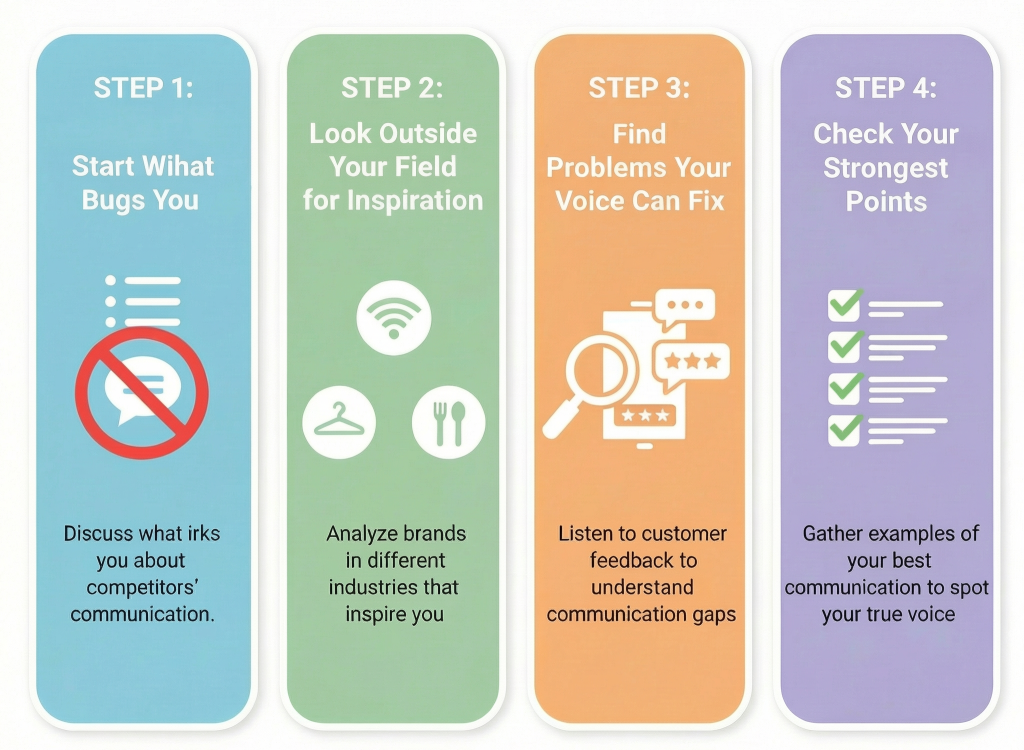
Step 1: Start With What Bugs You
Grab your team and ask: What makes you cringe when other brands in your field talk? What sounds fake? What feels like everyone’s copying each other? This tells you what to avoid.
Bark (the dog subscription box) looked at how boring pet companies sounded. They went the opposite way. They now have a “chairdog” who runs the company and writes captions that sound like how real dog parents talk. This comes from knowing exactly what they didn’t want to sound like.
Step 2: Look Outside Your Field for Inspiration
You don’t just have to study your competitors. You’ll end up sounding like them with a small twist.
Find three brands from totally different industries that you love. What do you like about how they talk? Is it their humor? Their honesty? How do they explain tough concepts?
Maybe you love how The Economist makes big ideas simple without talking down to people. Or how Duolingo makes learning feel fun on social media. These can inspire you even if they sell something totally different.
Step 3: Find Problems Your Voice Can Fix
Every industry has communication issues. But your voice can fix them.
To fix this, you need to review customer reviews and social posts about leaders in your field. Check for things that frustrate people, or ask yourself questions like “Do they hate robot-speak?” ”Is it the jargon”? ”Being talked down to”?
You need to make your voice friendly and clear, so that people feel companies in your space are not too technical. Your voice should become respectful and straight-up if they feel talked down to.
Backlinko noticed SEO content was usually dense and hard to read. So they created a voice that uses short paragraphs, simple words, and lots of pictures. This wasn’t just a style on their part. In fact, it solved a real problem for their readers.
Step 4: Check Your Strongest Points
Your true voice already exists somewhere. Look for it in:
- Emails the boss sends when excited about something
- Team chats when no one’s trying to be formal
- Messages to customers that got great responses
- Social replies people loved
Collect 5-10 examples and spot the patterns. What words show up a lot? How casual do you get? Where does your real personality shine?
You might find that your best emails are way more direct and fun than your marketing emails. The real voice is in those emails. Your marketing just needs to catch up.
Turn Discoveries Into Guidelines
Now make it official with these steps:
1. Pick three voice traits. Based on your findings, choose three words that capture your voice. Friendly? Bold? Straightforward? Keep it to three so people actually remember them.
2. Explain what they mean. “Friendly” can mean different things. So spell it out. Add a line that shows what it sounds like in day-to-day writing. For example, it may mean short sentences, warm words, and a helpful tone.
3. List words to use and avoid. If you want “clear,” pick simple words. Use “use” instead of “utilize.” Build a short list of swaps for common jargon. That way, anyone on your team can write in the same style.
4. Show how tone shifts. Your voice stays steady. But your tone changes based on the moment. A customer complaint needs a calmer tone than a social post. Still, both should sound like you.
5. Include examples. Show real samples of your voice done well (and done badly). This helps your team “get it” faster.
A brand voice should help real people. It should not only sound polished but also fit your team’s everyday writing style. It becomes a strong tool for standing out when it fits well. It also helps you build lasting connections with customers. And it stays yours because competitors cannot copy it line for line.